
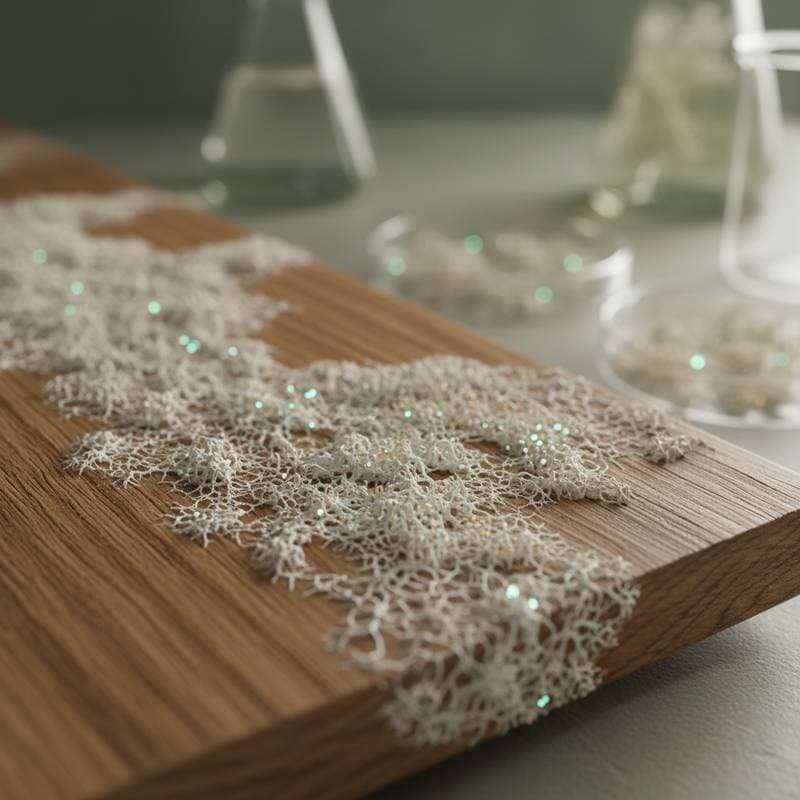
Mycelium as a Natural Wood Finish
A gallon of high end polyurethane costs between 45 and 80 dollars while releasing volatile organic compounds. Mycelium offers a different path by growing directly on wood to seal pores and create a renewable surface. Woodworkers gain a way to reduce chemical exposure without sacrificing protection.
Understanding Mycelium Properties
Mycelium forms dense interlocking fibers that bond with wood cells. When cultivated on a board surface it builds a thin breathable layer that resists moisture and minor abrasion. Researchers describe the result as a biofilm that functions like a hybrid between a sealant and a skin.
A typical mycelium coating measures between 0.5 and 1 millimeter thick. This thickness can reduce moisture absorption by up to 60 percent compared with untreated lumber. The coating allows air movement that prevents trapped moisture and warping. It also breaks down safely at the end of its life without toxic residue.
Application Process
Growing a fungal finish requires a clean space and consistent conditions. Follow these steps to establish the coating.
- Sand the wood to 220 grit and wipe it clean with 70 percent isopropyl alcohol.
- Spread a thin slurry of sawdust and starch no thicker than 2 millimeters.
- Press the mycelium culture into the nutrient layer and cover it with breathable fabric.
- Allow colonization until the surface whitens within 3 to 7 days.
- Stop growth with gentle heat or airflow once the color turns light beige.
The finished surface feels suede like. Some woodworkers apply a thin coat of beeswax to improve sheen and durability. The entire sequence takes about one week.
Cost Comparison
A traditional varnish or lacquer job costs between 3 and 6 dollars per square foot. A mycelium finish typically ranges from 1.50 to 3 dollars per square foot after cultures are reused. Initial supplies require an outlay of 75 to 100 dollars for sterile materials, starter cultures, and nutrient ingredients.
The main tradeoff is time rather than money. Growth and curing add several days compared with conventional finishing schedules. Shops that value sustainability often accept the slower pace in exchange for lower ongoing material costs.
Suitable Applications
Mycelium finishing suits careful hobbyists who avoid toxic solvents. It works well on small furniture pieces under 20 square feet, decorative panels, and low wear indoor items. Professional makers can incorporate the coating into eco certified product lines when clients request bio based alternatives.
Troubleshooting Common Issues
Contamination appears when dust or stray spores reach the culture. Clean all tools and surfaces with alcohol before beginning. Overhydration produces unwanted mold, so maintain humidity near 70 percent. Thick nutrient layers create uneven texture, therefore apply thin consistent coats. Cover the surface with breathable cloth rather than plastic to prevent premature drying.
Long Term Performance
Once established the coating can be patched by reapplying culture to worn areas without sanding. Regular dusting preserves the surface while avoiding harsh cleaners. Woodworkers who adopt the method report durable protection that aligns with reduced environmental impact and lower material expenses over multiple projects.