
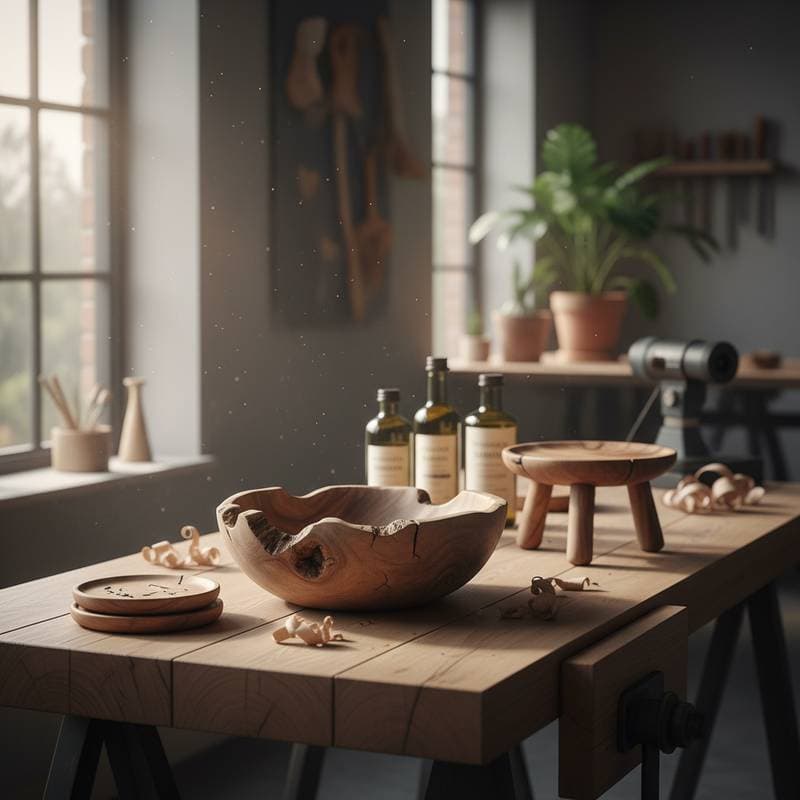
Why Wabi-Sabi Transforms Wood Finishing in 2025
A flawless, glossy surface may impress at first glance, yet a finish that reveals the wood's natural grain, subtle irregularities, and organic contours often evokes a deeper sense of vitality. This essence defines the wabi-sabi aesthetic in woodworking. Professionals and enthusiasts alike increasingly adopt this philosophy, which reshapes perceptions of aesthetic appeal, economic value, and enduring quality.
The movement gains traction through the popularity of penetrating oil finishes, hand-applied pigments, and designs that honor the material's raw character rather than concealing it. Such practices influence broader design directions, influence pricing strategies, and extend the lifespan of finished pieces. Grasping wabi-sabi principles equips woodworkers to select materials, methods, and coatings that align with market demands or personal preferences.
Understanding Wabi-Sabi in Wood Finishing
Rooted in Japanese aesthetics, wabi-sabi appreciates imperfection, transience, and genuineness. Applied to wood finishing, it emphasizes preserving the material's innate variations rather than eliminating them. Knots, mineral lines, and irregular grain patterns remain visible, fostering an authentic appearance free from artificial uniformity.
Finishes in this style typically incorporate natural oils or waxes over heavy synthetic varnishes. These substances penetrate the wood fibers, amplifying color and depth while permitting the surface to breathe. The outcome proves inviting to the touch and resilient to minor wear, as superficial marks integrate seamlessly into the overall patina.
This methodology suits contemporary workshops by harmonizing visual appeal with ecological considerations. Natural products emit minimal volatile organic compounds and demand less energy during manufacturing. Repairs become straightforward, involving localized sanding and reapplication rather than complete refinishing.
Practical tip: Experiment on a test piece of preferred hardwood with pure tung oil or a blend of beeswax and boiled linseed oil. Observe the subtle color shift and how ambient light accentuates the surface texture.
Step-by-Step Guide to an Authentic Wabi-Sabi Finish
Achieving this finish demands deliberate pacing and minimal intervention. The focus lies in unveiling the wood's inherent qualities, not imposing an idealized smoothness.
1. Surface Preparation
Begin with light sanding using 120- to 180-grit paper. This removes rough edges while preserving the grain's openness for optimal oil penetration. Refrain from progressing beyond 220 grit, as finer abrasives can seal pores and hinder absorption. Clean residue thoroughly with a lint-free cloth dampened in mineral spirits.
2. Initial Oil Application
Employ a soft, lint-free cloth or natural-bristle brush for even coverage. Liberally apply the chosen oil, allowing 15 to 20 minutes for absorption, then remove excess to prevent uneven drying. Avoid pooling or visible streaks. Permit full curing for at least 24 hours in a dust-free environment.
3. Gentle Burnishing
After the base layer hardens, use a white scouring pad or extra-fine 0000 steel wool to buff the surface lightly. This process imparts a subtle luster without high gloss and prepares the wood for subsequent layers. Work in the direction of the grain to maintain uniformity.
4. Subsequent Coats
Reapply oil and burnish as in previous steps for the second coat. For most applications, two layers suffice; add a third on high-wear areas like tabletops to bolster water resistance. Space applications by 24 hours, ensuring each dries completely.
5. Final Wax Layer
Apply a sparing coat of pure beeswax or carnauba wax using circular motions with a clean cloth. Allow 10 minutes for penetration, then polish vigorously to a satin sheen. The surface should feel velvety underfoot or hand, inviting interaction without excessive slickness.
Practical tip: Maintain a detailed record of your finishing process, including specific product formulations, mixing proportions, and environmental conditions. This documentation refines techniques over multiple projects and adapts to varying humidity levels.
DIY Versus Professional Application
Home woodworkers can master wabi-sabi finishes with dedication and a stable workspace. Ideal for modest endeavors such as benches, cutting boards, or wall-mounted displays, this approach requires minimal equipment: assorted grits of sandpaper, absorbent rags, application brushes, and polishing pads.
Ideal Scenarios for DIY
-
Smaller-scale work covering less than 20 square feet
-
Decorative or low-stress items tolerant of slight inconsistencies
-
Custom creations where personal involvement enhances sentimental value
Cases for Professional Expertise
-
Production runs of furniture or built-ins demanding uniform coloration
-
Expansive areas requiring precise control over absorption rates
-
Challenging species like curly maple or spalted wood with erratic patterns
Specialized facilities offer controlled humidity, advanced application tools for tinted oils, and expertise in matching future touch-ups. Such services ensure scalability for business operations.
Practical tip: When consulting professionals, request reference samples demonstrating intentional variation. Evaluate how they transform potential flaws into intentional design elements.
Caring for Wabi-Sabi Finished Pieces
These finishes evolve gracefully with regular interaction, developing a rich patina that reflects usage history. Annual maintenance involves applying a thin oil layer and buffing to revive vibrancy, bypassing the need for abrasive refinishing.
Daily care promotes longevity through simple habits. Employ coasters to mitigate water marks, though faint impressions add narrative depth. In professional contexts, this aesthetic underscores artisanal integrity and eco-conscious practices, resonating with discerning clients.
For pieces intended for resale, wabi-sabi distinctions set work apart from uniform factory output. Markets increasingly reward authenticity, often commanding higher prices for sustainable, story-rich items.
Practical tip: Accompany sold items with a care guide detailing recommended oils, seasonal refresh intervals, and gentle cleaning methods. This gesture builds trust and fosters enduring client relationships.
Sustaining Long-Term Beauty
Wabi-sabi finishes respond well to routine attention. Clean with a solution of mild soap and lukewarm water, then dry immediately with a soft cloth. Steer clear of abrasive cleaners or petroleum-based polishes that could alter the natural barrier.
Quarterly, replenish protection by warming a small quantity of oil in your hands and massaging it into the surface. Buff until the wood regains its warm glow. This ritual preserves the finish's integrity while honoring its evolving character.