
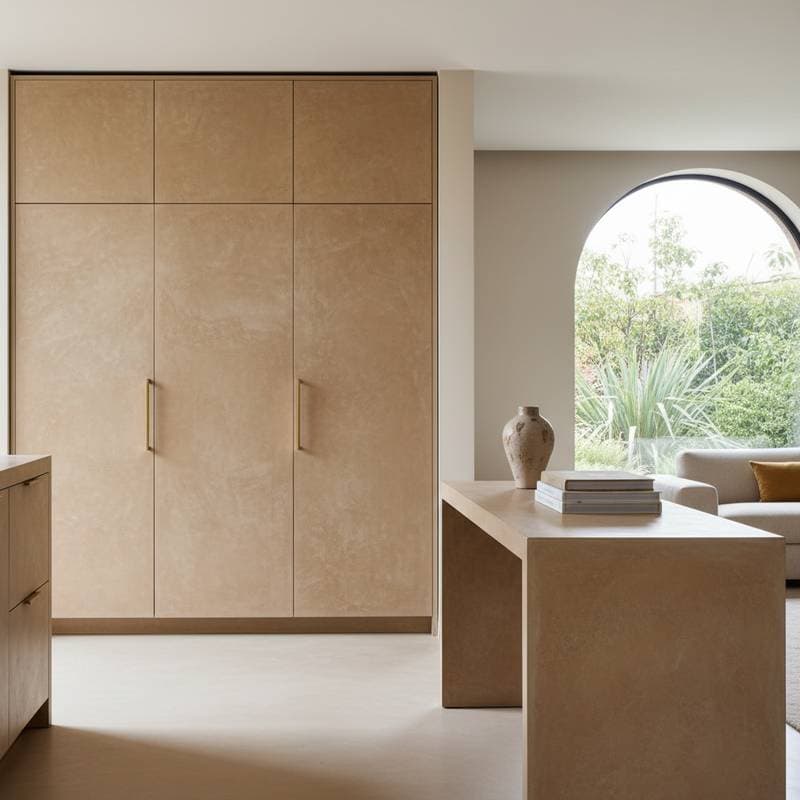
Why Venetian Plaster Outperforms Wood Stains Today
Cabinetmakers and furniture designers increasingly select Venetian plaster for wood finishes. A single application can elevate a simple oak panel to a surface that appears hand-sculpted, luminous, and enduring. Traditionally reserved for walls, this material now enhances high-end cabinetry, built-in features, and furniture. Readers may have encountered this finish in upscale hotels or gourmet kitchens and pondered its suitability for wood. This article explores the reasons for its effectiveness, application methods, cost considerations, maintenance requirements, and enduring benefits.
Achieving Superior Texture and Depth
Venetian plaster surpasses conventional wood stains in scenarios where depth and visual movement prove essential. Rather than pigments penetrating the grain, the plaster forms a surface layer that introduces subtle tonal variations responsive to lighting conditions. This creates an organic, historical aesthetic compatible with contemporary settings. When properly sealed, the finish resists fingerprints more effectively than matte paints and provides a sensory experience unmatched by spray-applied coatings.
The rising preference for textured cabinet surfaces fuels this trend. Property owners seek warmth devoid of excessive shine and personality without artificial wear. Venetian plaster fulfills these desires. Additionally, it conceals minor imperfections that high-gloss polyurethane might accentuate. An adept applicator adjusts the finish's luster via burnishing techniques, yielding results from a soft matte to a refined marble-like polish.
Reasons for its effectiveness:
The lime-based formula of Venetian plaster adheres reliably to prepared wood, establishing a permeable, mineral-like exterior. Upon curing, it solidifies akin to stone. This robustness guards against wear and imparts an authentic artisanal quality to cabinetry.
Practical recommendation:
To evaluate the appearance, begin with a small area such as a drawer front or side panel. Apply two slender layers and protect with natural wax or an acrylic topcoat. Examine the interplay of light on the surface prior to undertaking a full kitchen renovation or furniture project.
Evaluating Costs and Planning Budgets
Professional application of Venetian plaster on wood typically ranges from $10 to $23 per square foot, influenced by design intricacy and geographic location. Materials alone cost approximately $3 to $8 per square foot for premium lime plaster and colorants. Labor often doubles the material expense, as each layer requires complete drying before the subsequent one.
Budget categories:
- Basic option ($8 to $12 per square foot): Single hue with minimal texture and wax protection. Suitable for highlight panels or furniture facades.
- Intermediate level ($13 to $18 per square foot): Blended dual tones mimicking marble, burnished luster, and durable topcoat.
- Luxury tier ($19 to $23 per square foot): Layered application incorporating metallic accents or fine mica particles, concluded with buffing for a reflective sheen.
Strategies for cost efficiency:
- Restrict plaster to exposed areas. Finish hidden sections with standard paint.
- Opt for factory-tinted plaster to minimize colorant overuse.
- Perform the final wax sealing independently after professional plastering.
Proper preparation remains non-negotiable. Inadequate sanding or substandard priming results in separation. The wood base requires smoothness, sealing, and gentle abrasion to ensure even adhesion and prevent moisture inconsistencies.
Practical recommendation:
Obtain quotes from at least two specialists. Inquire about per-square-foot rates, coat quantities, and sealer options. Confirm that estimates account for drying periods and concluding burnishing.
Avoiding Pitfalls in Application
Even seasoned woodworkers encounter challenges with Venetian plaster. Problems often arise from moisture discrepancies, faulty sealing, or excessive burnishing.
Frequent errors:
- Omitting primer: Unprotected wood soaks up lime inconsistently, leading to uneven patches. Prime with a suitable base coat every time.
- Excessive thickness: Layers exceeding 1 millimeter risk cracking during curing. Maintain thin applications.
- Insufficient drying: Applying the next coat prematurely weakens the prior layer and promotes flaking.
- Intense burnishing: Overzealous trowel pressure generates dark marks or visible lines.
- Incompatible sealer: Oil-based products may discolor or haze the finish. Select natural wax or water-based acrylic alternatives.
Remediation approaches:
- Lightly sand and reapply slim layers to correct textural issues.
- Polish with fine steel wool and renew wax to revive luster.
- Sustain uniform temperature and ventilation throughout the curing process.
Practical recommendation:
Document mix proportions, drying durations, and tool orientations. Such records facilitate replication of positive outcomes or diagnosis of problems in subsequent endeavors.
Advancing Your Venetian Plaster Project
Essential insights:
- Anticipate overall installation costs of $10 to $23 per square foot.
- Allocate two to three days for complete curing and polishing.
- Employ lime-based plaster paired with appropriate sealers.
- Hone application skills on test pieces before broader implementation.
- Preserve the finish through mild cleaning and regular wax renewal.
Venetian plaster elevates wood pieces to heirloom status, blending durability with aesthetic sophistication. This finish not only withstands daily use but also enhances property value through its distinctive, light-responsive allure. Professionals and enthusiasts alike appreciate how it bridges traditional craftsmanship with modern demands, ensuring pieces remain vibrant for generations.
Recommended Resources
For further exploration, consider consulting specialized finishing guides or attending workshops on lime-based materials. Visual examples of completed projects can inspire custom adaptations, highlighting the versatility of Venetian plaster in diverse wood applications.