
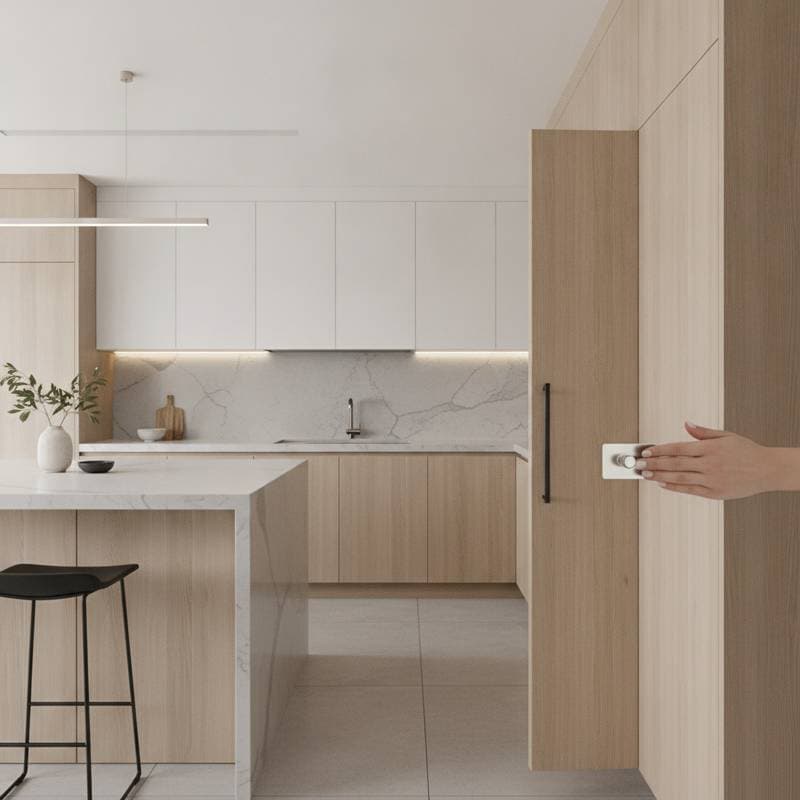
Why Magnetic Push-Open Cabinets Are Rising in Popularity
The clean, uninterrupted look of handleless cabinetry has moved from high-end showrooms into everyday kitchens and workshops. A small mechanism hidden behind each door or drawer front defines the change. A gentle press activates a magnetic latch that releases the panel.
Designers note that this hardware shift reflects preferences for simplicity and seamless function. Woodworkers and fabricators gain new options in joinery, finish, and proportion.
Current Applications
Homeowners, builders, and custom cabinetmakers adopt the approach for a modern, minimal aesthetic. Installations appear in kitchens, bathrooms, home offices, and studio workshops. Base cabinets typically range from 24 to 36 inches wide. Upper cabinets measure 12 to 18 inches deep.
Magnetic push latch systems or mechanical push-to-open slides provide the hardware. European kitchen brands, North American custom shops, and boutique furniture makers lead adoption. Photography often highlights continuous wood grain runs and the absence of visible hardware.
Earlier Limitations
Cabinet hardware once defined room style through oversized pulls or ornate knobs. These elements interrupted walnut grain or flat-front rhythms. Homeowners reported clothing catches and grease collection around metal pieces.
Cabinetmaker Erin Lathrop observed the complaint in nearly every remodel. People sought quieter surfaces that wiped down easily. Handle placement also restricted layout flexibility in small kitchens or tight shops.
Current Advantages
Magnetic push-open cabinetry removes those constraints. Panels meet with narrow reveals that allow long, continuous material runs. Light reflects evenly, and compact spaces feel wider.
Recent projects emphasize craft through uninterrupted grain on white oak islands. Home office units hide equipment behind matte lacquer doors. Workshop drawers keep tools accessible without snag risks. Interior designer Kai Moreno noted that the technology improves daily experience through responsive precision.
Mechanism Details
Each door or drawer front connects to a spring-loaded magnetic latch or mechanical push-slide. Pressing the panel releases the catch plate and allows slight opening. Soft-close hinges or slides control return motion.
Installers set reveals at one sixteenth of an inch for a near-seamless appearance. Adjustable magnetic strength matches panel weight. Heavier fronts use double latches to prevent sag.
Design and Material Choices
- Magnetic latches suit hinged doors while mechanical slides fit drawers.
- Painted MDF, natural veneers, and high-pressure laminate perform well with consistent finishes.
- Concealed LED strips along upper cabinet undersides accentuate clean lines.
- Micro-bevel edges reduce chipping on high-use doors.
- Occasional latch realignment maintains flush alignment.
Finishes such as walnut, rift oak, and ash show best with horizontal grain across multiple doors. Matte paints limit fingerprints. Brushed metallic laminates offer subtle industrial character.
Cost Factors and Setup
Individual magnetic push latches range from eight to twelve dollars. Mechanical push-slides for drawers cost thirty to fifty dollars per pair. A full kitchen may require forty to sixty pieces. The added expense often balances through reduced maintenance.
Precise measurement ensures each latch aligns within one sixteenth of an inch. Jigs speed setup during new construction. Shallow-bore options allow retrofit on existing frameless cabinets when door thickness permits.
Suitable Project Types
Modern kitchens pair handleless cabinets with flat-panel fronts and integrated appliances. Compact apartments gain clearance when projections are eliminated. Workshops benefit from elbow or knee operation and reduced dust traps. Bathrooms and laundry rooms avoid corrosion issues common with metal hardware.
Points to Evaluate
Matte finishes conceal fingerprints more effectively than gloss. Minor shifts require periodic hinge and latch tuning. Hardware adds moderate cost that maintenance savings offset over time. Users adapt quickly to the required gentle press.
Storage and Lighting Outcomes
Full drawer extension becomes possible beside walls or appliances. Narrow spaces gain clearance inches. Up to ten percent more drawer units fit in the same run. Concealed LED channels along bases enhance floating effects and even light distribution.
Integration into Daily Routines
Magnetic push-open cabinets create intuitive interaction with surroundings. Doors and drawers follow a quiet rhythm during use. Cleaning requires less effort and surfaces remain intact longer. The design supports calm environments where grain, light, and alignment receive full attention.