
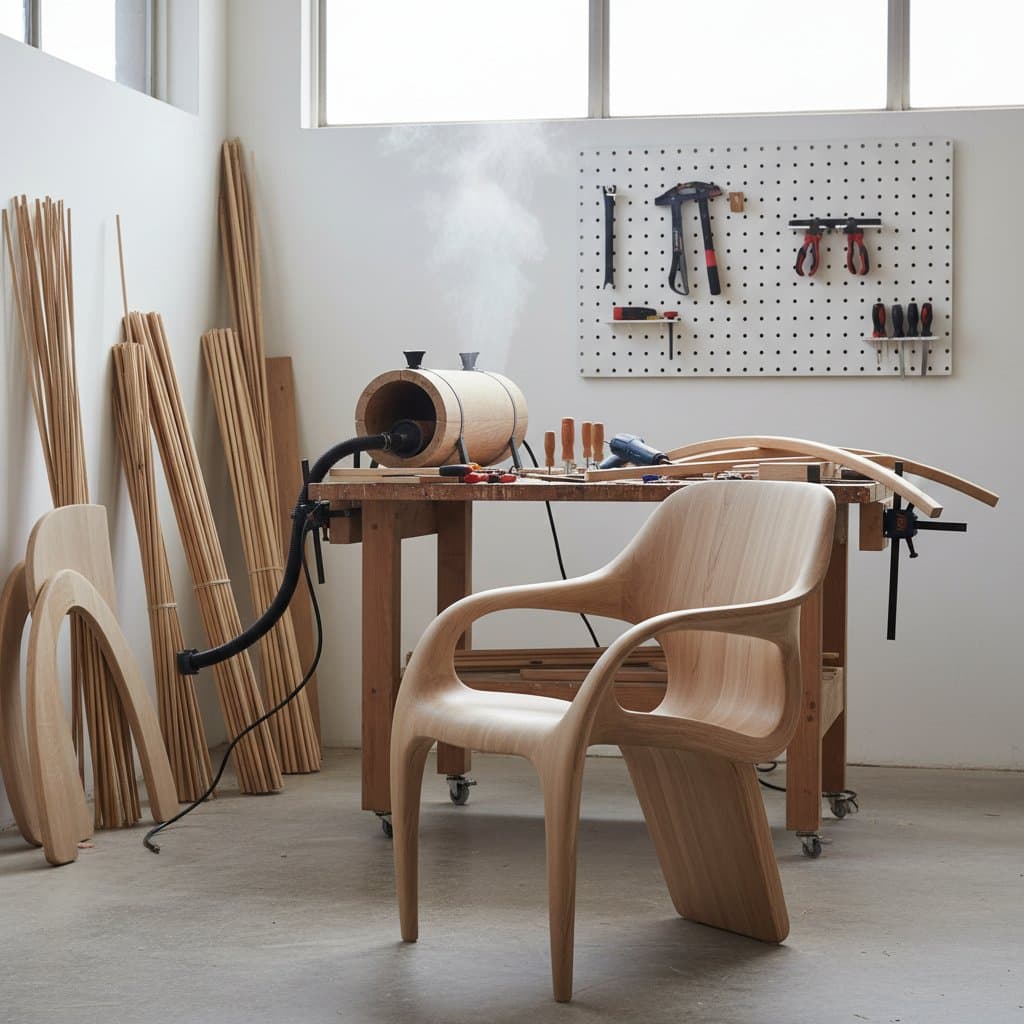
Steam-Bent Curves Are Taking Over DIY Furniture
A wave of smooth, organic curves is reshaping home workshops. Steam-bent furniture is no longer a niche craft. It is a growing DIY movement that blends artistry, engineering, and sustainability. Whether you build chairs, shelves, or lighting frames, bending wood with steam opens creative shapes that straight cuts cannot match.
At a Glance
| Factor | Typical Range | Notes |
|---|---|---|
| Setup Cost | $250 to $600 | Steam box, kettle, clamps, gloves |
| Project Time | 2 to 5 hours per piece | Includes drying time |
| Skill Level | Moderate | Safe for intermediate DIYers |
| Wood Types | Ash, oak, beech, walnut | Choose straight grain boards |
| Success Rate | 80 to 90 percent | Increases with proper moisture and patience |
Why Steam-Bent Furniture Is Everywhere
Curved forms make furniture feel lighter and more sculptural. Steam bending lets you achieve that look without cutting and gluing multiple pieces. Instead, you soften wood fibers with moist heat, then clamp the board around a form until it cools. The technique reduces waste by up to 25 percent compared with laminated curves.
Design magazines and maker forums highlight bentwood tables, coat racks, and stools that feel handmade but modern. The appeal lies in the subtle irregularity of each curve. No two pieces look the same, and the process encourages experimentation. You can shape a gentle bow for a chair back or a tight loop for a lamp frame, all from a single board.
How the Process Works
Steam bending relies on heat and moisture to make lignin, the natural glue in wood, flexible. Once soft, the board bends easily and keeps its curve after cooling.
Essential steps include:
- Prepare the wood. Choose boards with straight grain and minimal knots. A moisture content around 20 percent works best.
- Build or buy a steam box. A simple plywood box connected to a kettle or wallpaper steamer maintains even heat.
- Steam the board. One hour per inch of thickness is a reliable rule. Keep temperature near boiling for consistent results.
- Bend and clamp. Move quickly. You have about two minutes before the fibers stiffen again.
- Set the shape. Leave the bent piece clamped for 24 hours to dry and stabilize.
When done correctly, the curve will stay strong without additional reinforcement. If cracks appear, you can repair them with thin glue lines or use the piece for decorative elements rather than load-bearing parts.
Why it works: The method preserves long wood fibers, which makes the curve both strong and flexible. Unlike laminated bends, there are no glue joints to fail.
Costs and Budget
Expect to spend $250 to $600 on a starter setup that includes a steam box, heat source, thermometer, and clamps. Individual projects cost $40 to $150 depending on wood species and size. Hardwoods such as walnut or oak may add 20 to 30 percent to material costs but often produce smoother bends and better durability.
Money-saving ideas:
- Borrow or share a steam box with local makers.
- Use offcuts from larger boards for practice bends.
- Build forms from MDF or plywood instead of solid hardwood.
Avoid cutting corners on safety gear. Heat-resistant gloves, eye protection, and proper ventilation are nonnegotiable.
DIY or Professional Work
Steam bending fits skilled DIYers who have solid control of measurements and patience with trial and error. You need clamps, a sturdy workbench, and space to move hot materials. If you prefer instant precision, professional shops with industrial steam chambers can deliver flawless curves for $200 to $400 per component.
DIY fits when:
- You want artistic control and are willing to test multiple pieces.
- You have a home shop with basic woodworking tools.
- You accept minor variation as part of handmade character.
Hire a pro when:
- You need identical parts for multiple chairs or tables.
- The curve must meet structural or ergonomic standards.
- Time or safety constraints make home steaming impractical.
To vet a shop, ask about their bending radius limits, previous project photos, and whether they use kiln-dried or air-dried lumber.
Common Mistakes
Many beginners rush the process or use the wrong species. Common issues include:
- Cracking wood: Caused by dry boards or bending too tightly. Use higher moisture content and gentler curves.
- Spring-back: The wood relaxes slightly after unclamping. Overbend by five to ten percent to compensate.
- Uneven color: Steam can darken some areas. Sand lightly or finish with tinted oil for consistency.
- Warping: Clamp securely and allow full drying before removing forms.
Patience pays off. A careful setup and slow bend almost always yield a clean result.
Integrating Steam Bending Into Your Projects
Start with small test pieces to build confidence before committing to larger furniture. Experiment with different species and radii to discover what suits your style. Over time this method becomes a reliable way to create distinctive, low-waste designs that stand out in any space.